Sunday, April 3, 2016

Gujarat Electricity Regulatory Commission has issued Tariff Orders for financial year 2016-17, for 4 Nos. of DISCOMs of Gujarat, i.e.

MGVCL (Madhya Gujarat Vij Company Limited),
UGVCL (Uttar Gujarat Vij Company Limited),
DGVCL (Dakshin Gujarat Vij Company Limited)&
PGVCL (Paschim Gujarat Vij Company Limited)

today on the petition filed by these DISCOMs for truing up of their financials for 2014-15, and determination of tariff for fiscal 2016-17, under the multi-year tariff regulations, rationalized tariff for various category of consumers.
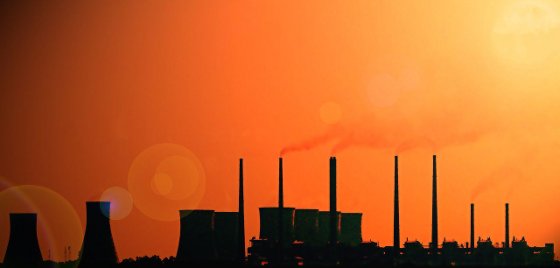
Image: Indianexpress


 As per press note on website:

- Tariff for residential consumers reduced by 10 paise/unit
- Residential consumers of the villages located within the geographical jurisdiction of UDA shall be billed 25 paise/unit less compared to present energy charges.
- Tariff for LTMD category consumers reduced by 10 paise/unit after rationalization
- Tariff for HT category consumers reduced by 14 paise/unit after rationalization
- Various conditions related to night time consumption of electricity relaxed

Get Press Note and Tariff Orders
Saturday, August 8, 2015

Coal-based power plants

On 15 May 2015, the Government of India came out with a draft notification on emission standards for coal based thermal power plants, opening it up for public comments. Till the time, there had been no specific emission standards for thermal power plants, except in respect of Particulate Matters which was also very high when compared to global standards.
There has been a series of publications in recent years by civil society groups like Greenpeace, Urban Emissions, Centre for Science and Environment on thermal power plants which have made headlines in India.  Some of the country’s premier engineering institutes have also came out with an extensive review on atmospheric pollution from coal based thermal power plants in India, such as this from the  Indian Institute of Technology, New Delhi in May 2014.

Raichur Coal based Thermal Power Plant. Pic: Tanzeel Ahad
 
A simple Google search on the health impact of thermal power plants in India will yield millions of results. A recent scientific publication in a highly rated open source journal PNAS showed how the per- hectare yield of rice and wheat have decreased over the last decade owing to the increasing concentration of aerosols produced as secondary pollution from thermal power plants.  The problem was grave and pressure from civil society as well as attention from research institutes made it imperative for the Government of India to come out with the first ever draft notification on specific emission standards for coal-based thermal power plant.
The Centre for Science and Environment which recently published the green ratings of thermal power plants in India has welcomed the move of the Government and expressed satisfaction with the new norms proposed. “We believe these lower standards are acceptable given technical and economic limitations in installing pollution control equipment in older units” said Priyavrat Bhati, CSE’s Director for Green Ratings Project through the official press release.
The Narendra Modi-led government has been much criticised for diluting the environmental law of the country in order to accelerate industrialisation and the compliments for the draft standards make one curious to explore if it is indeed going to be effective in reducing emissions and providing cleaner air................................................................................

Saturday, July 25, 2015

India's Regional Power Trade.

NEW DELHI: India has emerged as a hub of south Asian transmission network but daily spark of day-ahead trading is missing in its cross-border power trade due to regulatory hurdles.

Indian power exchanges have petitioned the Central Electricity Regulatory Commission to open doors to spot buyers from neighbouring countries as millions of units go waste at home due to busy transmission lines or poor appetite of financially stressed state utilities.

Tata Power has petitioned the regulator for permission to import power from its 126 mw Dagachhu hydel project in Bhutan through the Indian exchanges for sale in India till bilateral contracts are signed. Industry sources say there are consumers in Nepal and Bangladesh, countries with large unmet demand, willing to buy power from the Indian spot market.

But for the regulator, it is a grey area as the existing policy does not reflect the changing reality of expanding interlinks with neighbouring countries and power projects coming up in Bhutan and Bangladesh with Indian private investments. The government is examining the new reality and at least Tata Power's case is pending the external affairs ministry's approval.

The Indian grid is connected with Bhutan, Bangladesh and Nepal. Plans for establishing interlinks with Pakistan and Sri Lanka have remained enmeshed in the complexities of bilateral politics. Trade through the existing interlinks is guided by bilateral arrangements between governments. There is no third-party transit through the Indian network. India imports power from hydel projects it has set up in Bhutan and supplies electricity from a Central pool to Nepal and Bangladesh.

The Dagachhu hydel project is the first of several private power projects being built on foreign soil for supplying to local market, India or a third country. Reliance Power and Adani group recently inked deal for large power plants in Bangladesh.

The petitions by power exchanges point out that the ground is ready for cross-border trading because of financial and regulatory similarities in electricity markets of the interlinked countries. Initially, the volumes are expected to be small due to limited interlink capacity. But with plans for their expansion, a full-on regional power market is just round the corner, much in line with the scenario in Europe.

India, with a rapidly expanding generation capacity - estimated at 2.72 gw (giga watt) at last count - and surrounded by deficit countries, can be in the driver's seat only if it moves fast.

Read Source

Sunday, December 14, 2014

NDA cabinet earlier this week, passed big changes to the Electricity Act

The Narendra Modi government has been criticised in the last few months for not going about with reforms as enthusiastically as hoped but, in one sector, at least, expect major changes. Continuing an initiative held over from the previous regime, the NDA cabinet earlier this week, passed big changes to the Electricity Act, the main law which governs the economics of the sector.

If passed by Parliament, consumers could get the choice to buy power from companies of their choice rather than being tied to a single provider as is the case in most states. At the same time though, this could accelerate a process by which state utilities' losses deepen, imposing a heavy fiscal burden on their parent governments.

Experts that ET Magazine spoke to had mixed reactions about the changes. Surya P Sethi, a former principal advisor on power to earlier governments, hailed the reforms as 'essential for competition'. While arguing that the Act had been poorly implemented so far, he said: "I am glad this is being done now. Better late than never." Others were more circumspect.

Says Ashwini Chitnis, a senior research associate at Prayas Energy Group, a non-profit organisation looking at energy sector policy issues. "The amendments aim at making fundamental changes to the sector structure and organisation, but it is not clear how these changes will help in tackling issues such as state utility losses, rising tariffs, fuel availability problems, and poor quality of service ."

Moving Reforms Along 

In the first set of reforms starting in the mid-90s, a major aim was to split existing power companies into separate parts, each focused on generating power, transmitting it, or distributing it to the end consumer. This enabled distribution companies to buy power in the open market, from generators across the country, rather than from companies owned by the state of which they were a part.

"What possibly the government wants to do is actually take that one step forward. What the reforms aim to do is replicate this freedom for the end consumer as well," says Sushanta K Chatterjee, head of regulatory affairs at the Central Electricity Regulatory Commission (CERC), the apex regulator for the power sector.

Even in the current regime, the socalled open access is allowed for larger consumers with a load of 1 MW and above. A factory in Gurgaon for instance can, in theory, at least, buy power from any provider in the country, or even from a short-term power market such as IEX at a lower rate, rather than from the default distributor which, in most cases, is owned by the state government.

But open access never really took off for one simple reason: the biggest loser in this deal — the default distributor — was also the one that controlled the wires leading to the customer. The company that controlled the pipes was entitled to a surcharge for allowing its infrastructure to be used to supply power — and while the surcharge was regulated, it was often set very high, making any open access deal financially unviable. While power sector regulators in each state were in theory independent and could set such surcharges at a level that was competitive, in many cases they did not and were heavily under the influence of the state government, which also happened to be the parent of the distribution company in question.

But even apart from the surcharges, the state government had effective control over the transmission infrastructure within the state boundaries and could simply block any flow of power to an open access buyer from the seller. "A big problem was that the state-owned incumbent blocked access to market to competitors — through influence over the network operator as also state regulators imposing very high cross-subsidy surcharge and additional surcharge on open access — both being owned by the state government," says Amit Kapur, partner with J Sagar Associates, a law firm.
What the new reforms aim to do is to take the physical wire network and move that into a separate company for a given region or area (say, south Delhi or north Mumbai). Within a given area, multiple distribution companies would be licenced to operate and offer power to consumers, with all of them having the right to supply power to a given consumer, while paying a set, common fee to the company which now owns the wires.

By separating 'carriage' and 'content' this way, the Act aims to level the playing field between an existing supplier in any area who also happens to own the pipes, and challengers who want to enter with cheaper costs and power contracts but are hampered from doing so because of the costs of building an entire network. Your local distribution company will then be only responsible for billing you for the power you used, and collecting money.

Will it Work? 

Customers in Mumbai are already allowed to choose between competing suppliers such as Tata and Reliance, and the experience has hardly been trouble-free. There has been litigation around the issue and while some disputes have been resolved by the Supreme Court, others remain. Even supporters of the reforms are guarded in their assessment of how successful the latest reforms will be.

"The details of how this reform will be carried out are crucial," says Chatterjee. And while such details need not necessarily be covered in the letter of the Act itself, they remain key to the success of the reforms. One key issue is how the transition is carried out. Take the Maharashtra State Electricity Distribution Company (MSEDCL), for instance, which supplies power across Maharashtra excluding Mumbai. As Chitnis points out, MSEDCL has a range of power supply contracts with various types of power generation companies, with some of its contracts such as those based on hydropower being extremely cheap. With such sources of cheaper power, MSEDCL is able to mitigate the costs of supplying cheaper power to agricultural consumers. If new suppliers do come in, the key question is what happens to those cheaper contracts that MSEDCL has.
Given that it will just be one among a number of suppliers, it will hardly need all that power that it has contracted to buy from generation companies. If those power contracts are to be reallocated to new discoms, will the cheaper power that MSEDCL has, be included as well? The bigger problem is one of new entrants looking to cherry-pick the best consumers from the incumbent. If this does happen, the incumbent state utility will be left with poorer, less lucrative consumers, while at the same time losing high-paying consumers to competing (and possibly more efficient) private sector utilities.
And if, as in the case of MSEDCL, its cheapest sources of power are partly reallocated to the new entrants, it faces a double whammy — watching its average revenue from customers drop (as high-paying customers leave), and see its average cost of power purchase rise, as cheaper fuel sources are allocated to new entrants.

Sunday, November 30, 2014

Company plans to expand the capacity of its Mundra project by 1,500 MW by adding two units

Tata Power may cut dependence on Indonesian coal and explore other geographies to source the fuel for expansion of its 4,000 MW Mundra ultra mega power project in Gujarat.

The company owns stake in KPC mining company in Indonesia which owns and operates coal blocks in the island nation.

"It (import) could be from any market globally because after the HBA price regime was implemented in Indonesia, we get no advantage at all from ownership," Tata Power Managing Director Anil Sardana told PTI.

He said the coal for Mundra project expansion can be sourced from any other country and any other mine because one gets it at the market-determined price.

HBA price of Indonesia is the monthly coal reference rate which is calculated on the monthly average of four international coal indices.

"The expansion was on the assumption that the units will be linked to market phenomenon and we would be using imported coal," Sardana said.

The company plans to expand the capacity of its Mundra project by 1,500 MW by adding two units.

As per the original plan layout prepared by the Central Electricity Authority (CEA) there is space for space for two additional units.

"Since water is there, evacuation is there, every other facility is there and it makes sense for one to generate electricity at a cheaper price," Sardana said, adding that where else can one expect imported coal-based power being generated at less than Rs 3.

On whether the company would go ahead with the proposed expansion of the Mundra despite little clarity on the issue of compensatory tariff, Sardana said, "The compensatory tariff issue is only concerned with UMPP. As far as the two additional units are concerned, they will be at market prices, so therefore the two phases are completely different."

Central Electricity Regulatory Commission earlier this year asked the power procurers to pay Rs 329.45 crore as compensatory tariff for the Mundra plant to partly offset escalation in the price of imported coal.

Read More

Tuesday, November 25, 2014

India spends crore on power theft clampdown

India is going to great lengths to crack down on rampant electricity theft that has long plagued its power sector, with plans to spend ₹25,354 crore to deploy metering in cities and upgrade its old distribution networks, the Ministry of Power said on Thursday.

The "Integrated Power Development Scheme" will help reduce technical and commercial losses, as well as improve collection efficiency. The earmarked funds from the government will be offset from the total estimated cost of ₹32,612 crore.

Many Indians have come to view cheap, even free, power as a right rather than a privilege. Poor political will to address the thefts, and ageing transmission lines have badly hurt local distribution companies, with as much as 40 per cent of electricity going unpaid for in several states.

Addressing power theft to reduce losses forms part of Prime Minister Narendra Modi's key policy platform to bring uninterrupted power to the entire country. Modi was previously credited with tackling power shortages during his time as chief minister of Gujarat, curbing power theft and repairing the finances of distribution companies hit hard by unpaid bills.

The Union Cabinet chaired by the Prime Minister, Shri Narendra Modi, gave its approval to launch the scheme. State discoms and power departments will award the contracts for the execution of projects, which are scheduled to be completed within 24 months from date of award.

Read Source

Monday, November 17, 2014

Cyclone-prone Andhra Pradesh to switch over to underground power cabling

Cyclone-prone Andhra Pradesh is likely to become the first state in the country to supply electricity through underground cable system.

The massive changeover from the conventional pole system to underground cabling has been made possible due to a loan of Rs 716 crore granted by the Asian Development Bank, World Bank and Japan Bank.

Under the ambitious plan, a separate power supply line will be laid across 10 coastal districts at an estimated cost of Rs 838 crore.

Of this, the loan provided by ADB, WB and Japan Bank would account for Rs 716 crore at a nominal interest rate.

Read full article